Commercial Chiller Repair in Abilene, Texas
When a commercial chiller stops cooling, alarms repeatedly, leaks, short cycles, or cannot hold water temperature, your building and operations can be affected quickly. Emergancy Appliance Repair Abilene provides fault-focused commercial chiller service for facilities that need clear diagnosis and practical repair guidance.
Chiller issues that should not be ignored
A shutdown is often the machine protecting itself from a deeper problem. Repeated resets can make the fault harder to trace and may increase downtime.
“`- Chiller is running but not cooling properly
- High temperature, low pressure, or high pressure alarms
- Poor chilled-water flow or pump-related problems
- Compressor hard starting, short cycling, or repeated trips
- Water leaks around pumps, piping, valves, or the chiller base
- Suspected refrigerant leak or lower cooling capacity
- Loud mechanical noise, vibration, or rising energy use
- BAS control faults, sensor problems, or communication issues
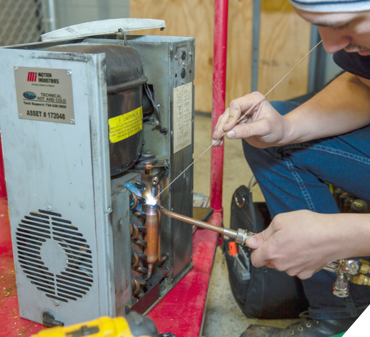
Commercial chiller repair for facilities that cannot risk cooling loss
Our chiller service page is designed for the person responsible for the building, process, equipment room, or temperature-sensitive operation.
“`Building & Facility Teams
For building engineers, facility managers, and commercial property managers dealing with alarms, warm zones, tenant complaints, and work orders.
Food & Cold Storage
For restaurants, grocery operations, foodservice sites, and cold storage facilities where rising temperatures create operational risk.
Industrial & Process Sites
For manufacturing, packaging, equipment cooling, glycol loops, and process applications that depend on stable temperatures.
Medical & Education Sites
For medical offices, schools, colleges, campus buildings, labs, dining spaces, and equipment rooms.
Hotels & Event Spaces
For hotels, churches, gyms, and event properties that need dependable comfort cooling during high-occupancy periods.
Base-Area Businesses
For commercial buildings near Dyess AFB and throughout the Abilene business corridors.
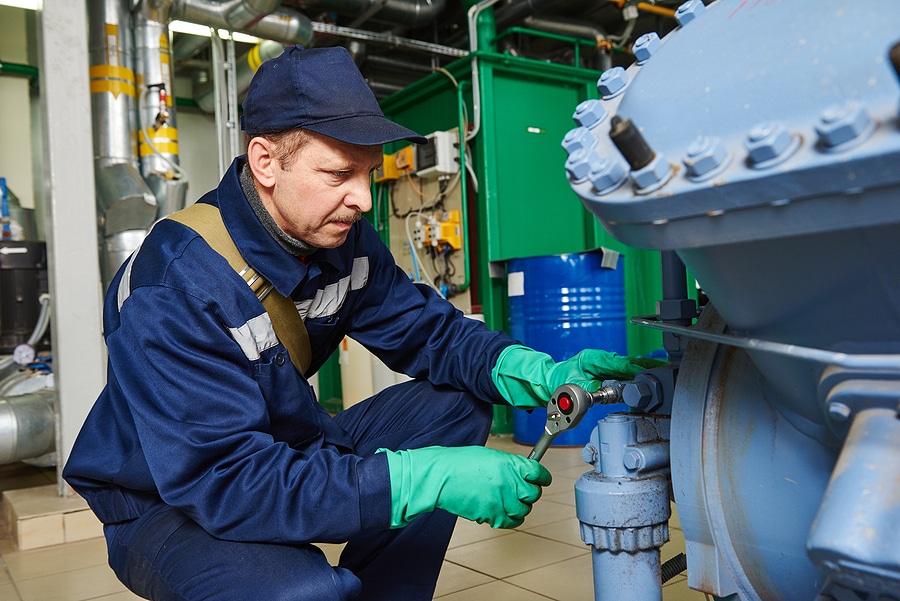
A clear repair path, not guesswork
A real chiller service call starts with what the equipment is showing now. We review alarm history, supply and return water temperatures, pump flow, compressor behavior, pressure readings, condenser and evaporator condition, controls, sensors, and electrical components.
If a circuit appears low on refrigerant, the fault must be traced. A proper repair sequence includes locating the leak, repairing and pressure testing the circuit, confirming the vacuum holds, charging by the equipment nameplate requirements, and checking operation under load.
Explore the Repair StepsCommercial chiller types and common fault areas
“`Air-Cooled Chillers
Dirty condenser coils, fan motor faults, high-pressure alarms, compressor trips, refrigerant circuit faults, and control problems.
Water-Cooled Chillers
Condenser water flow issues, cooling tower faults, tube fouling, pump failure, water treatment concerns, and heat-transfer loss.
Process & Glycol Chillers
Temperature-control problems, glycol loop condition, heat exchanger checks, pump flow, control settings, and process load issues.
Screw Chillers
Oil-system checks, compressor readings, capacity-control concerns, pressure conditions, and electrical diagnostics.
Modular Chillers
Multi-circuit faults, staged compressor issues, communication errors, individual circuit alarms, and control logic problems.
Scroll & Centrifugal Systems
Staging, loading, water-side conditions, sensor readings, refrigerant performance, and compressor behavior.
What to do first when your chiller alarms or stops cooling
Do not keep resetting the same alarm. Record the alarm code, affected area, supply and return water temperatures, and any visible water leak location. Do not bypass safety controls or allow untrained staff to handle refrigerant lines, electrical components, or moving equipment.
Our commercial chiller repair process
Gather Problem Details
We identify the alarm, affected area, cooling application, and reported operating symptoms.
Confirm Chiller Type
We determine whether the system is air-cooled, water-cooled, process, glycol, modular, screw, scroll, or centrifugal.
Check Readings & Alarm History
Current readings show what the machine is doing now; alarm history can reveal recurring patterns.
Inspect Water Temperatures & Flow
Pumps, strainers, valves, flow switches, supply water, and return water are checked early in the process.
Test Electrical & Compressor Operation
Starting behavior, contactors, relays, wiring, amp draw, breakers, and compressor response are reviewed.
Check Heat Transfer Components
Condenser and evaporator conditions are assessed because fouling, blockage, or freezing can mimic larger faults.
Trace Refrigerant & Control Faults
Pressure, leak signs, sensors, BAS signals, and control settings are checked before any repair decision.
Repair, Restart & Test
After repair, the system is restarted and evaluated under real operating conditions before the service call closes.
What affects commercial chiller repair cost?
Pricing depends on chiller type, failed part, accessibility, labor time, refrigerant work, urgency, parts availability, and the actual cause of the fault.
“`| Reported Issue | Possible Fault Areas | Typical Repair Scope |
|---|---|---|
| Chiller not cooling | Flow, refrigerant, compressor, controls | Moderate to extensive diagnosis |
| High-temperature alarm | Pump, flow, load, sensor, condenser | Moderate repair scope |
| Low-pressure alarm | Leak, restriction, sensor fault | Moderate to extensive repair |
| High-pressure alarm | Dirty condenser, airflow, water flow | Moderate repair scope |
| Water leak | Pump seal, piping, valve, drain | Limited to extensive repair |
| Poor water flow | Pump, strainer, valve, air in loop | Limited to moderate repair |
| Hard starting | Starter, contactor, power, compressor | Moderate to extensive repair |
A firm repair recommendation should follow diagnosis, not a guess from the alarm code alone.
Repair or replace a commercial chiller?
“`Repair may make sense when
- The chiller is newer and the system matches the building load.
- The fault is limited to a pump, sensor, valve, contactor, control issue, or small leak.
- Parts are available and repeat failures are not a pattern.
- Operating costs remain reasonable after repair.
Replacement may make sense when
- The chiller is aging and important parts are difficult to source.
- Compressor faults, refrigerant issues, or controls problems keep returning.
- Energy use has increased and the unit no longer suits the building load.
- Downtime risk is becoming more expensive than planned replacement.
Chiller repair coverage in and around Abilene
We serve commercial facilities across Abilene and nearby Big Country communities.
“`Commercial chiller repair questions
“`Why is my commercial chiller not cooling?
A chiller may not cool because of low water flow, dirty condenser surfaces, refrigerant loss, compressor trouble, pump failure, sensor faults, control issues, or heat-transfer problems. Temperature, flow, pressure, and alarm history should be checked first.
What causes a chiller high-temperature alarm?
A high-temperature alarm usually means the chiller is not removing heat quickly enough. Common causes include weak pump operation, low flow, dirty condenser surfaces, low refrigerant, heavy load, fouling, or an incorrect sensor reading.
Why does my chiller keep shutting down?
Shutdowns may be triggered by high pressure, low pressure, poor flow, compressor overload, electrical faults, safety controls, or BAS and sensor issues. The shutdown itself is often a warning of another fault.
Can a refrigerant leak reduce chiller capacity?
Yes. A refrigerant leak can reduce cooling capacity, increase run time, trigger low-pressure alarms, and cause temperature drift. The leak should be identified and repaired before the system is recharged.
Do you service water-cooled and air-cooled chillers?
Yes. Air-cooled systems may need condenser-coil, fan, compressor, refrigerant, or control checks. Water-cooled systems may need cooling-tower, water-flow, tube-condition, pump, water-treatment, and refrigerant diagnostics.
What information should I have ready before calling?
Have the chiller type, brand, model, alarm code, supply and return water temperatures, pressure readings if available, leak location, affected building area, and any recent maintenance notes.
Need commercial chiller repair in Abilene?
Call when your chiller is not cooling, leaking, alarming, making unusual noise, short cycling, or repeatedly shutting down. Share the system type, alarm code, temperatures, and affected area to help start the diagnosis.
“`